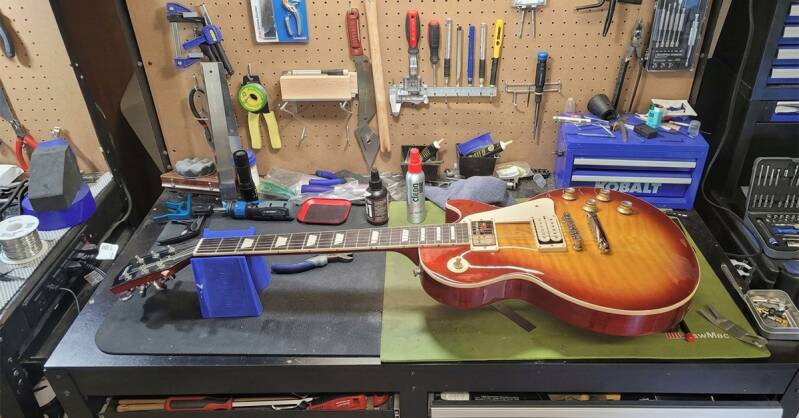
A broken guitar neck can be upsetting, but it does not always mean the instrument is beyond repair. Learn common causes, warning signs, repair options, guitar broken neck repair, guitar crack repair, and why professional assessment matters.
You pick up your guitar, and something feels wrong. Maybe you dropped it. Maybe it took a hard hit in the case. Or perhaps you noticed a crack near the headstock that was not there before.
And then comes the question most guitar owners ask:
“Does this mean my guitar can’t be repaired?”
I understand that reaction. A guitar is not just a collection of wood, strings, and hardware. You may have played it for years, recorded songs with it, performed with it, or simply kept it because it means something to you.
The good news? A broken guitar neck does not automatically mean the guitar is beyond guitar broken neck repair.
Why Do Guitar Necks Break?
A guitar neck can be surprisingly strong, but it also has areas that are more vulnerable than others. The headstock and the area where the neck meets the body are common trouble spots.
Why?
The neck is under constant string tension. That tension is part of what gives the guitar its sound, but it also means a damaged neck needs to be taken seriously.
Some common causes include:
- Accidental drops: A guitar can fall from a stand, chair, bed, or wall hanger. It only takes one bad landing to cause serious damage.
- Hard impacts: A guitar case may protect the instrument from many bumps, but a strong impact can still crack or break the neck.
- Pressure on the headstock: Leaning a guitar against something or storing it poorly can put pressure on a vulnerable area.
- Changes in wood condition: Wood responds to changes in humidity and temperature. Extreme or sudden changes can contribute to cracks and other problems.
- Weak points in the neck: Certain neck and headstock designs naturally have areas that are more likely to break when the guitar takes a hit.
Have you ever looked at a small crack and thought, “It doesn't look that bad. Maybe I'll just keep playing it”?
That is where I would recommend slowing down.
What Does a Broken Guitar Neck Look Like?
Not every crack means the neck is completely broken. Some damage may be a surface crack, while other damage can go much deeper.
You might notice:
- A visible crack around the headstock
- A section of the neck that has separated
- Strings suddenly sitting differently
- Difficulty tuning the guitar
- Changes in string height
- New buzzing or unusual sounds
- The neck feeling unstable when you play
Sometimes the damage is obvious. Other times, it can be surprisingly easy to miss.
That is why I don't like judging a guitar repair based only on what can be seen from the outside.
Can a Broken Guitar Neck Actually Be Fixed?
In many cases, yes.
This is probably the part you wanted to hear.
A proper guitar broken neck repair can often restore the strength and function of the instrument. But the right repair depends on where the neck broke, how badly it broke, the type of guitar, and the condition of the wood.
A professional repair may involve carefully separating damaged areas, cleaning the break, aligning the pieces, using the proper adhesive, and reinforcing or stabilizing the damaged section when needed.
The goal is not simply to make the crack disappear.
The repair needs to be strong enough for the guitar to handle normal playing and string tension again.
What If the Neck Has Only Cracked?
A crack does not always mean the neck needs to be completely rebuilt.
This is where proper inspection matters.
A small crack may be repairable before it becomes a much bigger problem. If you keep tuning and playing a guitar with a developing structural crack, the constant string tension can make the damage worse.
“But it still plays fine.”
I hear this kind of thinking often, and I understand it. If the guitar sounds okay, it is tempting to leave it alone.
But a guitar can continue playing while a structural problem is getting worse.
That is why guitar crack repair should be assessed based on the location, depth, movement, and overall condition of the guitar.
Should You Try to Repair It Yourself?
I know there are plenty of repair videos online. You may even be thinking, “I have some clamps and wood glue. How hard can it be?”
For a simple cosmetic issue, some basic guitar maintenance can be manageable. A broken neck is different.
The alignment has to be right. The glue and repair method have to suit the instrument. Pressure has to be controlled carefully. And the neck needs to return to a stable position.
A repair that looks fine from the outside can still leave the guitar weak or difficult to play.
If the neck has broken under string tension, I would rather see the guitar inspected properly than watch a small problem turn into a much bigger one.
What I Look For During a Neck Repair
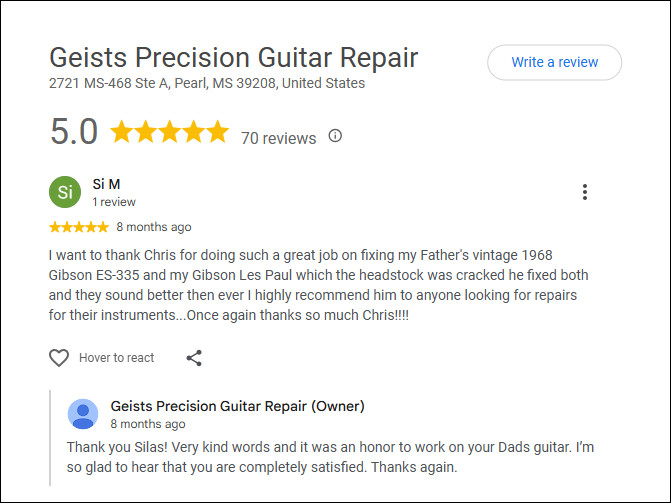
When a guitar comes into Geist's Precision Guitar Repair with neck damage, I don't just look at the broken spot and stop there.
I take the time to understand what happened.
- Where did the break start?
- How deep is it?
- Did the wood split cleanly, or was it crushed?
- Is the neck still properly aligned?
- Has the damage affected other parts of the guitar?
Those details help determine the safest and most effective way forward.
I treat every instrument as its own repair. Two guitars can have similar-looking breaks but need very different solutions.
Let's Rewind:
A broken neck can look heartbreaking, especially when it happens to a guitar you have owned for years.
But before you start thinking about replacing the instrument, have the damage properly assessed.
I have always believed that guitars deserve more than a quick fix. Every instrument has a story, and sometimes the right repair can give that story many more years.
So, if you are holding a guitar with a cracked or broken neck and thinking, “Is this worth saving?”
Don't decide too quickly.
Bring it in, let me take a close look, and we can talk about what happened, what can be repaired, and what makes sense for your guitar. Sometimes, what looks like the end of a guitar's life is simply the beginning of its next chapter.